
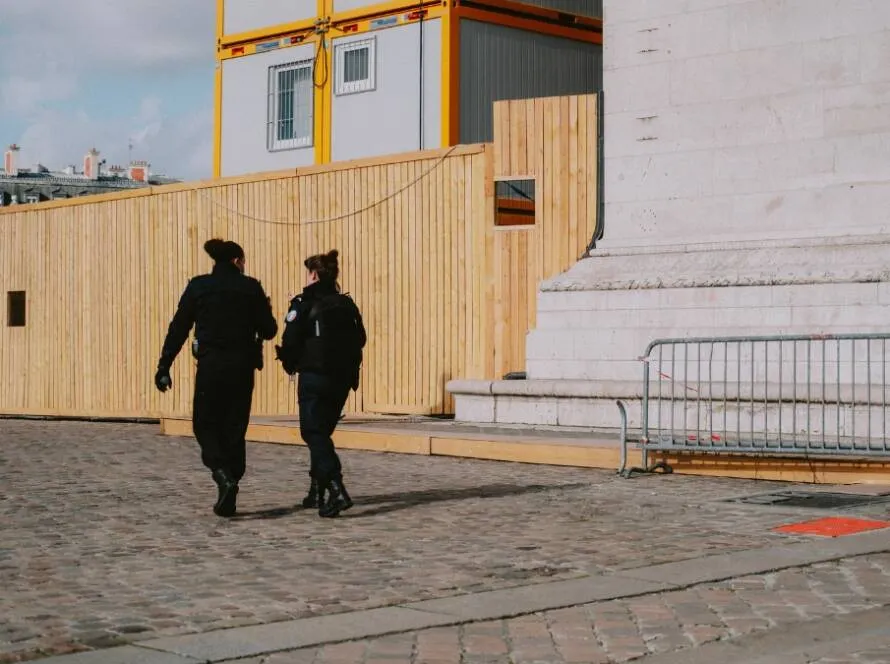
Private security is still surrounded by misconceptions that have been repeated for decades. These beliefs can make companies and individuals hesitate to hire a professional protection service — or, worse, make decisions based on wrong assumptions. Let’s debunk the three most widespread myths.
Myth 1: “Private security is only for the wealthy”
This is probably the most deep-rooted prejudice. The image of the bodyguard in a dark suit behind a public figure has fixed the idea that professional protection is an unattainable luxury.
Reality is very different. It covers needs as everyday as:
- Surveillance of residential communities and estates.
- Access control at corporate events or trade fairs.
- Protection of retail premises after recurring incidents.
- Custody of valuables during one-off transfers.
Each service is designed bespoke and adjusted to the client’s budget and actual risk level. In many cases, the cost of a preventive surveillance service is lower than the cost of a single avoided incident. The right question is not “can I afford security?” but “what does it cost me not to have it?”
Myth 2: “Private security competes with or replaces the police”
This confusion leads people to think that hiring private security shows distrust toward law enforcement. Nothing could be further from the truth.
In Spain, private security is regulated and licensed by the Ministry of the Interior. Its role is complementary, not a substitute. Security guards and private escorts operate within a strict legal framework and maintain coordination with police forces when the situation requires it.
Think of it this way: the police handle emergencies, investigate crimes, and ensure public safety at a general level. Private security, on the other hand, offers continuous, preventive presence in a specific space: a facility, an event, a transfer. While the police cannot be permanently present in every business or residential area, a private surveillance service can.
Both models work best when coordinated, not when opposed.
Myth 3: “Anyone can be a security guard”
This myth minimises the training and legal requirements to work in the sector. Good appearance or willingness are not enough: the sector requires a rigorous licensing process.
To work as a security guard or private escort in Spain you must:
- Pass the selection tests convened by law enforcement forces.
- Complete mandatory training at centres authorised by the Ministry of the Interior.
- Obtain the professional licence (Professional Identity Card).
- Renew the licence periodically and complete refresher modules.
- For armed services, obtain the corresponding weapons licence and accredit specific firearms training.
Furthermore, professionals with operational experience in public security bring added value: they know response protocols, incident management, and institutional coordination that are only acquired through years of fieldwork.
Conclusion
Debunking these myths is the first step toward making informed decisions. Private security is not a luxury, it does not compete with the police, and not just anyone can do it: it is a regulated, professional service adaptable to each client’s real needs.
If you have doubts about what type of service you need, the most useful thing is to speak with a licensed team that analyses your situation in a personalised, no-obligation way.
Informational content that does not constitute legal advice. See our editorial policy.