
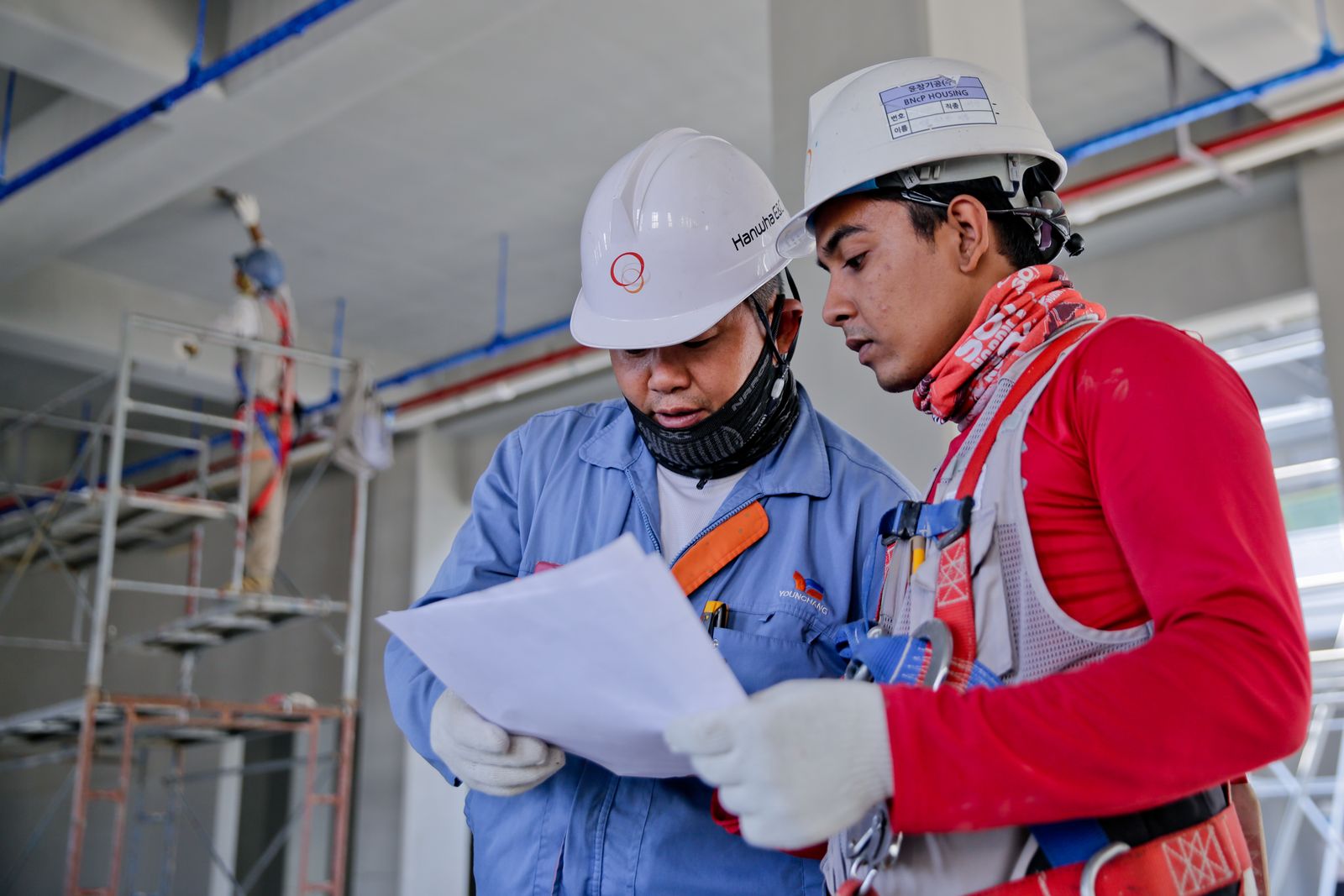
Few things are as frustrating on a construction site as arriving in the morning to find the manholes forced open, the cabling cut, and the tools and machinery gone. It is not an isolated event: theft on building sites has become a structural problem, and copper is its leading protagonist. Its price has climbed by more than 90% in just a few years, turning every metre of cable into easy loot to sell on the black market.
Spain’s Guardia Civil keeps a National Plan against Copper Theft running precisely for this reason. A nearby example: in 2026, three people were arrested in the Almanzora region (Almería) for stealing public lighting and fibre-optic cabling in Fines and Olula del Río, leaving entire towns without service and causing damage estimated at around €13,000. The method — reaching into lamp boxes and manholes, cutting and extracting — is repeated across Andalusia.
Why construction sites are such an attractive target
A building site brings together, in one place and with almost no permanent surveillance, everything a thief is looking for: valuable material, machinery that is easy to resell, fuel, tools and access points left open out of operational necessity. Add to this circumstances that multiply the risk:
- Periods with no activity: nights, weekends, public holidays and work stoppages.
- Open perimeters or fencing removed in phases.
- Multiple subcontractors, with heavy traffic of people and vehicles that is hard to control.
- Material stockpiles in plain sight, with no marking or traceability.
- Sites in isolated areas, where an alarm takes a long time to get a response.
The result is not only financial. Copper theft can cut off a site’s temporary power supply, delay the schedule, affect the safety of the workers themselves and push up insurance costs.
What gets stolen (and it is not only copper)
Although copper grabs the headlines, the list of usual targets is broader than it seems:
- Cabling and conductors from temporary installations, streetlights and electrical panels.
- Power and hand tools, which disappear easily and without a trace.
- Light machinery: generators, compactors, cutters, scaffolding.
- Fuel from tanks and site vehicles.
- New packaged material — sanitaryware, taps, plumbing copper — easy to resell.
On farms and adjoining warehouses the pattern is similar, and copper theft from irrigation and rural power networks remains one of the most damaging for the sector.
Prevention on site: what the developer controls
Much of the risk can be reduced with organisational measures before any security is hired:
- Complete perimeter fencing and a single controlled access point where possible.
- Lighting for storage areas and access points.
- Marking and registering material (codes, engravings), which hinders resale and aids recovery.
- Locked panels and manholes, with no cabling in sight.
- Removing tools and sensitive material daily to a locked container.
- Access control for subcontractors, with recorded entries and exits.
These measures are necessary, but rarely sufficient on their own: the most serious thefts tend to happen at night, when no one is on site.
Private security as a deterrent response
This is where a security company adds value that is hard to replace. The key is that the thief knows, before trying, that the site is not alone:
- Night rounds and surveillance during the highest-risk time slots.
- Discontinuous, unpredictable surveillance, far more effective than a fixed schedule.
- A visible presence of security guards acting as a deterrent.
- Early detection of access, vehicles and suspicious movement.
- Coordination with the Guardia Civil and the Police, and with the site’s management.
On large or long projects, combining human surveillance with video surveillance and access control technology covers the whole perimeter without multiplying costs: cameras detect, the control room alerts, and the guard responds.
Tailoring the service to each phase of the project
A construction site is not the same at every stage. During earthworks there is little material stockpiled; during installations and finishes, copper, sanitaryware and tools are concentrated on site. A serious security plan adjusts the intensity of the service to each phase, reinforcing surveillance when the value accumulated on the site is highest.
That approach — analysing what is there, when and where, and protecting accordingly — is what prevents both theft and unnecessary spending.
If you manage a site, a warehouse or a farm and want to reduce the risk of material theft, contact our team. We design a surveillance setup tailored to the phases and characteristics of your project, with licensed personnel (D.G.S.E. 4713).